I have to hold my hand up and say I didn't get The Hangover. What I mean by that is, I didn't get what all the fuss was about. I laughed at the trailer, but the whole film didn't do it for me the way I'd hoped. Still, I'm willing to give this a go, not least because of the presence of RDJ who I will watch in anything...
Thursday, 15 July 2010

Tuesday, 13 July 2010
Bad bad bad bad bad
 It's very rare that I walk out of a film. And when it comes to watching a DVD or Blu-ray at home, I'm equally rigid in my viewing; it takes something extraordinarily awful for me to hit eject. That something was Pandorum which I rented last night, in spite of the mostly bad reviews, simply because I'm a sucker for space movies. BIG effing mistake. It's a terrible, terrible film and not what SFX claim on the cover to be "the finest intersellar horror in years".
Harvey Pekar, 1929-2010

Here's Pekar on the David Letterman show.
Monday, 12 July 2010
Nolan Fest: Inception
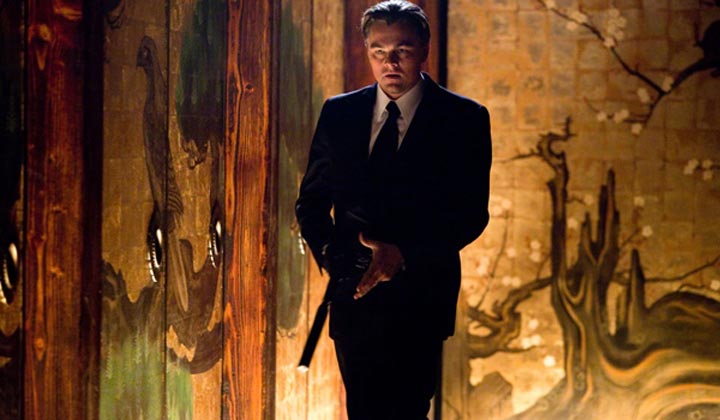
Christopher Nolan’s follow-up to his billion-dollar grossing The Dark Knight has long been the film on which we’ve all pinned our movie-going hopes this summer. Does it disappoint? Not. One. Bit. To reveal too much in writing about it would be to spoil what is not just the film of the summer but perhaps the film of the year, especially given the outstanding job Nolan and his marketing team have done in shrouding Inception in a veil of mystery from day one, teasing at its secrets via a series of stunning if reasonably oblique trailers.
Nevertheless, there are a few things you can know. Leonardo DiCaprio is Dom Cobb, dream thief and expert in the art of extraction, capable of entering the sleeping minds of others and pulling from them their most valuable corporate secrets via shared dreams. On the run from the US authorities, unable to return home to his two young children, Cobb is offered the opportunity to clear his name by Ken Watanabe’s shady businessman Saito. His task, not to extract information from someone’s subconscious, rather to plant an idea — “the most resilient and powerful parasite” — into the mind of rival industrialist Robert Fischer (Cillian Murphy). But interception, as it’s called, requires going far deeper, in order to imbed an idea into the subconscious so the dreamer actually believes it’s his own.
To aid him in this, Cobb assembles his very own dream team: Arthur (Joseph Gordon-Levitt), his regular Point Man and the ying to his yang; Tom Hardy’s dandyish Forger Eames who excels at malleable personas within the dream state; and Dileep Rao’s Chemist whose powerful sedatives help prise open the realms of the subconscious, allowing access to dreams within dreams. To create the Escher-like dreamscapes into which Murphy’s mark will be pulled, Cobb hires Ellen Page’s architecture student Ariadne, whose namesake in Greek mythology helped Theses find his way out of the labyrinth. But Ariadne’s no fool and quickly discovers Cobb’s dirty little secret: that he’s unable to prevent his wife, Mal (Marion Cotillard), from rising out of his subconscious to sabotage his work. In fact, Cobb and Mal’s hostile and fractured relationship is at the very heart Inception, which, despite its globe-spanning plot, intricate narrative, awe-inspiring action set pieces, and fantastical central conceit, is a story of love and of one man’s obsession, with DiCaprio playing another of Nolan’s troubled leading men who, much like Bruce Wayne or Memento’s Leonard, remains haunted by his past to the detriment of his present.
The film lays out the rules of the dream state upfront and with minimum fuss and scientific babble. If you die in a dream, you wake up. If you die in a dream within a dream, you wind up in limbo, neither dead nor alive. Nolan, too, eschews the surrealism of other dream-related movies for something more real and lucid, and, for the most part, solid, and even edits his story to adhere to the rules themselves. In Memento, there were no establishing shots because Guy Pearce’s character never knew where he was. Here, characters bounce around without seeming to travel. Scenes begin and end without warning, just like in a dream.
As Cobb sets his elaborate plan in motion, the film’s second half interweaves a series of sensational dream sequences into one seamless whole, filling the frame with never-seen-before images and moments of dazzling originality, Nolan’s preference for practical effects over CG bringing a degree of believability to the action that no amount of digital wizardry can rival or replicate. There are gunfights, a snow-covered-mountain-top battle, fisticuffs in zero-G, a freight train barrelling down a rain-lashed LA street, and much more besides. But Inception isn’t your typical brainless summer entertainment in spite of its release date. Yes, there are thrills. And chases. Both foot and vehicular. Things explode. Buildings collapse. Whole city blocks flip over on themselves. Yet Inception isn’t determined by spectacle. Every set piece, each moment of jaw-dropping action adds to the story Nolan’s telling, as seemingly random events ripple and coincide and connect in unimaginable ways. DiCaprio, too, is superb, his fraught, emotionally-charged performance anchoring the film through shifting states of reality, ably assisted by a pitch-perfect supporting cast whose characters subtly change depending on whether they’re in the dream world or not.
Part heist movie, part Matrix, part Bond, Inception is, nevertheless, very much its own beast, a dazzling tour de force of imagination and ingenuity that has, justifiably, earned him comparisons to Kubrick. But Nolan’s his own man. And Inception is his masterpiece. Cerebral, complex, and challenging, it’s a film that asks much of its audience, and for some that might be asking too much; at times it makes Memento’s narrative structure look as simple as C-B-A. And as with any Nolan film you really must pay close attention to absolutely everything from the get-go, because while there’s no obvious M Night Shyamalan-style twist ending, there’s more here than meets the eye. What is certain, though, is that the debate will rage and run. And you will need to see this at least twice.
As Hardy’s character remarks to Gordon-Levitt’s, “Don’t be afraid to dream a little bigger, darling.” It’s a throwaway line, in the midst of a large-scale action sequence, but it’s one that could easily be read as a challenge to his fellow filmmakers, both in Hollywood and around the globe, to step up to the plate and try harder. With Inception, Christopher Nolan’s not only raised the bar, he’s changed the entire game.
Sunday, 11 July 2010
Campeones del mundo
 It wasn't a great game but the best team won. Plus the Dutch were really dirty. Nigel De Jong, you should be ashamed of yourself. And as for you Arjen Robben...
Altogether now: "Ole. Ole. Ole. Ole..."
Saturday, 10 July 2010
UPDATED: Inception press conference
Total Film has an edited version of the Inception press conference here. When I work out how to embed it, I'll update with the video.
Obsessed With Film has a rundown of the highlights from the press conference, together with a photo of said event. And yes, that's half of me you can see on the far left...

Obsessed With Film has a rundown of the highlights from the press conference, together with a photo of said event. And yes, that's half of me you can see on the far left...
Friday, 9 July 2010
Apologies...
For the lack of this week's edition of the Nolan Fest. Me culpa. I had wanted to delve into his Batman movies but time just got away from me as various work commitments — including hosting Wednesday's press conference for, yes, Inception with Nolan, producer Emma Thomas, Leonardo DiCaprio, Ellen Page, Joseph Gordon-Levitt, Tom Hardy, Cillian Murphy and the wonderfully dry Ken Watanabe — piled up, and something had to give. But I will have my (more expansive) thoughts on Inception up early next week.
For now, on this sweltering Friday afternoon, all that remains is for me to wish you all a lovely and pleasant weekend. The weather's going to be good and hot. Make the most of it.
And, come Sunday night, I trust you'll all be cheering for Spain...
Hasta luego.
For now, on this sweltering Friday afternoon, all that remains is for me to wish you all a lovely and pleasant weekend. The weather's going to be good and hot. Make the most of it.
And, come Sunday night, I trust you'll all be cheering for Spain...
Hasta luego.
Trailer 2: The Social Network
I love how they're marketing this thing, although it might be nice to see some footage with the next one.
Thursday, 8 July 2010

Yep, it's a masterpiece
 That's all I can say for now. Well, that and it's everything I hoped and dreamed it would be.
Sunday, 4 July 2010
Monsters promo
Alongside Chris Nolan's Inception, the other film must-see film for me this year is Gareth Edwards' Monsters which I've already written briefly about and which is playing at Frightfest. Here's a lovely little promo in which the next Robert Rodriguez explains how it was done.

Back in time
Twenty five years ago this weekend Back To The Future was released. It's the kind of smart, entertaining, commercial filmmaking that Hollywood seems incapable of making these days. How I wish Robert Zemeckis would give up on the mo-cap and get back to writing and directing movies like this again.
The Back To The Future trilogy will be released on Blu-ray later this year.
The Back To The Future trilogy will be released on Blu-ray later this year.
Friday, 2 July 2010
Frightfest 2010 line-up
 FrightFest, Britain's — no, make that the world's — premier horror film festival, has just announced this year's line up. You can find the complete list by clicking here and it's a cracker, including Gareth Edwards' much lauded Monsters, Tobe Hooper's little seen debut Eggshells, A Serbian Film (pictured), Paul Andrew Williams' Cherry Tree Lane (which was shot down the road from me), the I Spit On Your Grave remake, Hatchet II and The Last Exorcism. Frightfest 2010 runs from August 26-30.
Nolan Fest, Week Four: The Prestige
I know, I know, I should be writing about Batman Begins this week, but various circumstances prevented me from revisiting the film in time, and so, instead, I offer my thoughts on The Prestige. I actually wrote this review back in 2006 when I first saw The Prestige, and re-reading it again today, I realise I don't feel any different about the film now...

“Are you watching closely?” intones Christian Bale’s East End magician Alfred Borden at the start of Christopher Nolan’s magnificent follow-up to Batman Begins. It’s as much sage advice as it is a rhetorical question, because, as befitting a movie about magicians and their secretive, elusive, and mysterious craft, this is all about the business of illusion and the magic of misdirection. You really do need to pay attention. Having already a proved himself a master manipulator with the narrative constructs of Following and Memento, Nolan, who co-wrote the script with younger brother Jonathan from a Christopher Priest novel, has here crafted a richly evocative, devilishly intricate mystery play, a cinematic sleight of hand that’s as intriguing as it is dazzling.

Unfolding in flashback [and with flashbacks within those flashbacks], the film begins with Borden on trial for the murder of Angier, before deftly filling in their past, the tragic reasons behind their rivalry — Angier blames Borden for the death of his wife (Piper Perabo) — their respective romantic/familial interests and their subsequent ascent to the top of their profession.
Like all the best magicians, Nolan’s a master of showing much but telling very little. Appearances, after all, can be deceiving. His work here is simply astounding, incorporating the three basic elements of the magic trick — namely, the Pledge (ie. the set up); the Turn (the trick itself); and the Prestige (the reveal) — into the fiendishly clever, twisty plot, using each to drive the narrative. He’s not so much interested in the visual side of magic, rather the psychological. The film looks stylish, but it’s never flashy nor tricksy in the way it’s shot. Everything and everyone serves the film, so much so that even the sight of Scarlett Johansson prancing around in corset and stockings is merely another layer of icing on an already rich and satisfying cake rather than a distraction. [Although English newcomer Rebecca Hall, as Borden’s wife, reveals herself to be a talent to watch.]

The rivalry between the two illusionists never feels forced, never less than truthful. Borden’s the better magician, Algier the better showman (a reflection, too, perhaps of the actors’ real-life personas, with Jackman the star of many a stage musical). So when the mechanics of Algier’s latest trick — ripped off from Borden’s big finale — force him to take his standing ovation whilst secreted beneath the stage — as, up above, a drunken doppelganger basks in the applause — it kills him, further fuelling his obsession with discovering Borden’s secret, and the enmity.
Inevitably, there are some minor quibbles. The grimy London streets that Bale and Jackman traipse are clearly a Hollywood backlot, although it’s hard to pinpoint an exact location to which to ascribe David Bowie’s odd accent (to be fair, he’s not bad as Nikola Tesla, the electrical genius). But that’s just nitpicking. Nolan was never going to let us down. And once he’s revealed the secret to his trickery, you’ll be left shaking your head in delightful appreciation. Savor it. Just don’t give it away...
“Are you watching closely?” intones Christian Bale’s East End magician Alfred Borden at the start of Christopher Nolan’s magnificent follow-up to Batman Begins. It’s as much sage advice as it is a rhetorical question, because, as befitting a movie about magicians and their secretive, elusive, and mysterious craft, this is all about the business of illusion and the magic of misdirection. You really do need to pay attention. Having already a proved himself a master manipulator with the narrative constructs of Following and Memento, Nolan, who co-wrote the script with younger brother Jonathan from a Christopher Priest novel, has here crafted a richly evocative, devilishly intricate mystery play, a cinematic sleight of hand that’s as intriguing as it is dazzling.
Once friends, now bitter rivals following a water tank trick that went tragically wrong, Victorian-era stage magicians Robert Angier aka The Great Danton (Hugh Jackman) and Alfred Borden (Bale) are constantly trying to one-up the other, even to the point of sabotage. After stealing Borden’s big trick, the Transported Man gag, Angier embarks on an obsessive journey to discover its true secret — whatever the cost.
Unfolding in flashback [and with flashbacks within those flashbacks], the film begins with Borden on trial for the murder of Angier, before deftly filling in their past, the tragic reasons behind their rivalry — Angier blames Borden for the death of his wife (Piper Perabo) — their respective romantic/familial interests and their subsequent ascent to the top of their profession.
Like all the best magicians, Nolan’s a master of showing much but telling very little. Appearances, after all, can be deceiving. His work here is simply astounding, incorporating the three basic elements of the magic trick — namely, the Pledge (ie. the set up); the Turn (the trick itself); and the Prestige (the reveal) — into the fiendishly clever, twisty plot, using each to drive the narrative. He’s not so much interested in the visual side of magic, rather the psychological. The film looks stylish, but it’s never flashy nor tricksy in the way it’s shot. Everything and everyone serves the film, so much so that even the sight of Scarlett Johansson prancing around in corset and stockings is merely another layer of icing on an already rich and satisfying cake rather than a distraction. [Although English newcomer Rebecca Hall, as Borden’s wife, reveals herself to be a talent to watch.]
The rivalry between the two illusionists never feels forced, never less than truthful. Borden’s the better magician, Algier the better showman (a reflection, too, perhaps of the actors’ real-life personas, with Jackman the star of many a stage musical). So when the mechanics of Algier’s latest trick — ripped off from Borden’s big finale — force him to take his standing ovation whilst secreted beneath the stage — as, up above, a drunken doppelganger basks in the applause — it kills him, further fuelling his obsession with discovering Borden’s secret, and the enmity.
Inevitably, there are some minor quibbles. The grimy London streets that Bale and Jackman traipse are clearly a Hollywood backlot, although it’s hard to pinpoint an exact location to which to ascribe David Bowie’s odd accent (to be fair, he’s not bad as Nikola Tesla, the electrical genius). But that’s just nitpicking. Nolan was never going to let us down. And once he’s revealed the secret to his trickery, you’ll be left shaking your head in delightful appreciation. Savor it. Just don’t give it away...
Here's Spidey

Andrew Garfield has been announced as the new Spider-man. It's a good choice, I have to say. He's certainly talented — just check out his performances in Boy A and Red Riding for proof of that.
I've interviewed him a couple of times, on the sets of Terry Gilliam's The Imaginarium Of Doctor Parnassus, when he was wearing a wig, false breasts and a dress, as well as Never Let Me Go. The 26-year-old British actor also stars in David Fincher's upcoming The Social Network.
"From the first time we saw him in The Social Network, to his glorious screen test, which floored all of us, we knew that we had found our new Peter Parker,” said Amy Pascal, co-chairman of Sony Pictures, in a statement.
Ouch!

"The Last Airbender is an agonizing experience in every category I can think of and others still waiting to be invented," writes Roger Ebert. "The laws of chance suggest thatsomething should have gone right. Not here It puts a nail in the coffin of low-rent 3D, but it will need a lot more coffins than that. Let's start with the 3D, which was added as an afterthought to a 2D movie. Not only is it unexploited, unnecessary and hardly noticeable, but it's a disaster even if you like 3D. M Night Shyamalan's retrofit produces the drabbest, darkest, dingiest movie of any sort I've seen in years. You know something is wrong when the screen is filled with flames that have the vibrancy of faded Polaroids. It's a known fact that 3D causes a measurable decrease in perceived brightness, but Airbender looks like it was filmed with a dirty sheet over the lens."
Thursday, 1 July 2010
Wednesday, 30 June 2010

Tuesday, 29 June 2010
Ray Harryhausen at 90
 I couldn't make Saturday's BAFTA/BFI Birthday Tribute to stop-motion/visual effects legend Ray Harryhausen who is 90 years old today. But Empire's Ian Freer has written such a glowing report of the celebration, hosted by John Landis and featuring such luminaries as Rick Baker, Phil Tippett and Peter Jackson, that I feel like I was actually there.
Monday, 28 June 2010

Arse

How much do they get paid a week and yet they can't do basic stuff like pass and retain the ball. And defend.
Saturday, 26 June 2010
Now that's what I call a teaser
This teaser for David Fincher's The Social Network popped up online last night. It's a brilliant example of the art of tease, very old school in its approach, and most welcome in this age of shouty trailers. It's so good it could be a marketing masterclass: How do you make a film about Facebook interesting to audiences? Here's how...
Friday, 25 June 2010
Nolan Fest, Week Three: Insomnia
“White nights getting to you?”
Christopher Nolan’s third feature was a reworking of Erik Skjoldbjaerg’s 1997 Norwegian thriller Insomnia, starring Stella Skarsgård. It was his first experience of working for a major Hollywood studio, namely Warner Bros which has become his home for every movie since.


Christopher Nolan’s third feature was a reworking of Erik Skjoldbjaerg’s 1997 Norwegian thriller Insomnia, starring Stella Skarsgård. It was his first experience of working for a major Hollywood studio, namely Warner Bros which has become his home for every movie since.
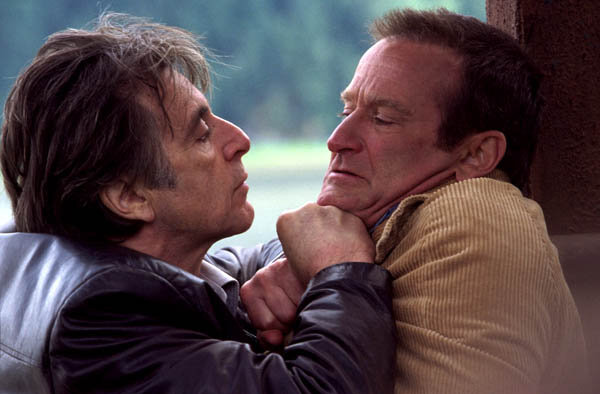
Nolan had begun work on Insomnia even before Memento was released, having been recommended to the studio by the film’s executive producer Steven Soderbergh. “I saw Memento months and months before it came out, when they were in the midst of trying to find a distributor, [and] was totally blown away by the movie,” Soderbergh told me back in 2002 when I interviewed him for a Nolan profile for Premiere. “When I found out Chris was interested in [directing] Insomnia I made one of those calls to Warner Bros saying that they would be, how can I put this, unwise to pass up the opportunity to work with Chris who had a take on the material and who’s extremely bright and capable and just kept badgering them.”
For Nolan, Insomnia offered the chance to tell a story simply and chronologically, after the fractured narratives of Following and Memento. “In Memento there were a lot of debate questions around the plot, and much less on the thematic questions,” he recalls. “I was interested in making a plot much more transparent in its structure so that the thematic concerns would be much more directly approached; ambiguity and questions at the end are much more available and approachable. In Memento there was a constant manipulating of the audience. This time I wanted something where that was more in the background.
“I think it has a fascinating and very evocative psychological situation,” Nolan continues. “A great moral dilemma that is taken one direction in the original movie, and I think it’s a great movie, but as I saw it, it occurred to me that you could by changing the characters take the same situation, the same intense psychological relationship between the two main characters and take it in a rather different direction and create a different kind of moral paradox.”
Although a fan of Skjoldbjaerg’s film, Nolan tried to put it out of his mind once he committed to directing the remake. “I didn’t watch the original myself once I committed to the project because we didn’t want to be doing stuff either because it was in the original or not doing stuff because it was in the original. I didn’t want to make any kind of a reactive film. It’s a film that has to work dramatically, totally independently of the original film and particularly when it comes to characterization the key differences in what we tried to do as opposed what the original tried to do evolved from differences in characters, so as far as the actors were concerned I was very happy for them to just work from the script.”
Insomnia begins with Los Angeles homicide and robbery detectives Will Dormer (Al Pacino) and Hap Eckhart (Martin Donovan) flying to the small costal town of Nightmute, Alaska (“the Halibut fishing capital of the world”) to help investigate the murder of a local teenage girl. For local cop Ellie Burr (Hilary Swank), assigned to babysit Pacino’s veteran detective, Dormer’s both a legend and her hero (she wrote her thesis at the academy on him). But all’s not well with Dormer, who’s being investigated by Internal Affairs over an allegation that he tampered with evidence in order to gain a conviction. Hap, meanwhile, is prepared to cut a deal with IA to save his own skin, at the expense of his partner, putting a huge strain on their relationship.
As Dormer swiftly begins to get to grips with the murder case, but disaster soon strikes, when stakeout at a beach hut goes horribly wrong. With the killer fleeing the scene, the police give chase. In the confusion and the thick fog shrouding the beach and surrounding area, Dormer shoots Hap dead. Was it an accident? Or did Dormer kill his partner to prevent him testifying? Dormer, who’s having trouble sleeping thanks to the constant daylight, doesn’t even know for sure. As his guilty conscience rears its ugly head (he sees Hap in his room and in his waking dreams), his judgment clouds, and the veteran detective tries to cover up his mistake. But worse is yet to come for Dormer, when, one night, he receives a call from the girl’s murderer and Dormer’s prime suspect, crime novelist Walter Finch (Robin Williams), who says he saw what really happened on the foggy beach with Hap, and starts to blackmail Dormer into helping him. “We’re partners on this,” Finch tells him.

This is one remake that actually improves on the original, the script by Hillary Seitz reworks the story to push the characters into darker, more morally and ethically ambiguous territory, with Pacino accentuating the physical strain of sleep deprivation on Dormer, as his cop suffers through many nights unable to sleep and loses his grip on both reality and right and wrong. The character of the killer, too, is transformed into someone less predictable and much more interesting, not least because of who plays him. Credit Nolan with keeping his heavyweight, Oscar-winning cast in check, and extracting such strong performances from all three leads, even coxing what is, arguably, Pacino’s last, truly great performance.
The opening sequence is a dazzling plane journey across a breathtaking Alaskan landscape, with jagged blue ice fields and green pines, and, in addition to the beach hut shootout, there’s also a gripping chase between Pacino and Williams across a log-strewn river. But while Nolan isn’t adverse to pretty images, he’s more interested in what’s happening inside his characters’ heads. Working again with Wally Pfister as his DP, he creates an atmosphere of paranoia and dread during daylight.
“It occurred to me, and I discussed this a lot with Wally, that having daylight constantly present in the background of scene actually allows you to create even darker images than if you would if you were shooting at night, cause if you are shooting at night you are effectively having to use artificial illumination, you are having to put lamps on in the room. Whereas what we were sort of trying to create was these dark interiors where somewhere in the back of the room there is a window with some sort of light peeping in and that allows you to create very dark silhouettes, and forms, interesting textures and depths. So in that way there are all kinds of senses you can create a darker film during daylight hours than you can at night.”
Insomnia was a sizeable hit, commercially and critically, and within Hollywood it firmly cemented Nolan’s place as a rising star, the film drawing him Hitchcock comparisons, and giving Warner Bros the faith in the 31-year-old filmmaker to hand him the reins to a major comic book movie franchise.
“Because I was shooting at almost the same time I went up just before they wrapped Insomnia and spent a couple of hours on the set, just saying hello to everybody,” recalled Soderbergh. “And I said to Chris, the great news is you’ve withstood the most difficult situation a young filmmaker can find themselves in, making a studio movie with movie stars in it, on a pretty tight schedule, having never operated in that world before. You’ve not only survived, you’ve excelled, and that means that from now on, the only thing that will limit you is your ideas of what you can do.”
Thursday, 24 June 2010
Trailer: Red
It's based on a comic book by Warren Ellis and features Dame Helen Mirren totting a machine gun. What else do you need to know.
Tuesday, 22 June 2010
Mad for it
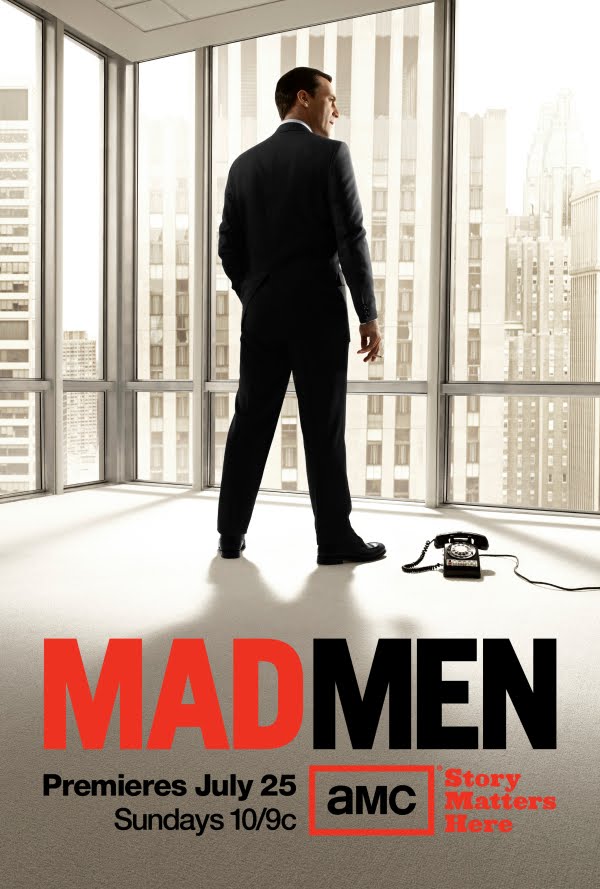
Season three of Mad Men ended on such a high I'm counting the days until season four begins. American audiences get the show next month. Here in the UK we're always way, way behind. So much so that I have to bury my head in sand (metaphorically speaking) for months so I don't inadvertently pick up spoilers...

Trailer: The Green Hornet
I'm not sure this necessarily needs to be seen in 3D but it looks fun enough. Doesn't feel very Gondry, though.
Monday, 21 June 2010
Film review: Toy Story 3

I could go on and on about the exquisite detail in the animation and how the script is so beautifully layered and nuanced that it scores on every level and for every age group. I could, but I won't. All I will say is this, if you haven't seen it, see it. And if you have, well, see it again. I know I will.
Saturday, 19 June 2010
Teaser poster: The Social Network
Missing four vital words as far as I'm concerned, those being: Directed. By. David. Fincher.


Friday, 18 June 2010
Nolan Fest, Week Two: Memento

I can still remember the first time I saw Memento. It was in a small London preview theatre in 2000. There were only five of us present at the screening, and from the opening image of the Polaroid undeveloping and then being sucked back into the camera, I was hooked. When the film finished, I wanted to see it again. Immediately.
I interviewed Christopher Nolan the very next day, the first of several conversations I had with him about Memento which opened in the UK a couple of months later, and the US early the next year, eventually earning him and his younger brother Jonathan a Best Original Screenplay Oscar nomination and launching the filmmaker in Hollywood.
Here's the article on Memento I wrote for Premiere magazine back in 2001. It's not online, so unless you read it back then, you wouldn't have seen it.

January 2001: Bright Lights, Park City
By the time Christopher Nolan’s Memento screened at Sundance, it had already been “discovered” at the Toronto, Venice, and Deauville film festivals and opened to wildly enthusiastic audiences in England. But there’s nothing quite like the white-hot media glare of Robert Redford’s independent-film showcase to generate excitement for a movie, as Steven Soderbergh, Kevin Smith, and the makers of The Blair Witch Project would attest. For ten days this past January, moviegoers on the streets and slopes of Park City, Utah, debated Memento’s plot points and urged those who hadn’t seen the twisty thriller to rearrange their schedules accordingly. “We had a great screening early one morning,” said Nolan, who got in a little skiing before attending the festival’s closing ceremony (at which he won the Waldo Salt Screenwriting Award). “I had trouble getting up myself, so I thought, ‘Who the hell is going to be there?’ But it was packed—for a mind-fuck at 9 o’clock in the morning!”
A mesmerizing meditation on memory, identity, and loss, Memento (in limited release in March) is a revenge thriller that plays out backwards, beginning with the end and ending with the beginning. Guy Pearce (L.A. Confidential) portrays Leonard Shelby, a former insurance investigator with short-term memory loss, a rare (and real) condition brought on by his wife’s rape and murder. Since Leonard is unable to form new memories (his attention span is 10 to 15 minutes) and can only recollect events from before the incident, he must rely on Polaroids, hastily scribbled notes, and other people — including barmaid Natalie (Carrie-Anne Moss) and a cop named Teddy (Joe Pantoliano) — to tell him everything from which motel he’s staying at to whom he can trust. As he looks for the person responsible for his wife’s death, Leonard tattoos his body with the most vital pieces of information regarding the killer’s identity.

“It’s very much about the futility of revenge,” says Nolan, 30, who’s half-English, half-American and has a preppy, professorial air about him. “Leonard can’t identify himself in the present tense — he knows who he was, but he can’t connect that with who he is — and revenge seemed an excellent jumping-off point for an examination of the subjective nature of reality.”
From its startling opening image of a Polaroid photo undeveloping and being sucked back into the camera, to its intriguingly oblique website (www.otnemem.com), designed by Nolan’s younger brother, Jonathan, who wrote the short story on which the film is based, there’s little about Memento that’s conventional. None of the characters are who they initially appear to be; nothing is quite what it seems. Only one thing is certain: Everybody is manipulating Leonard — Teddy, Natalie, the motel receptionist, even Leonard himself. Moreover, the deliberately ambiguous ending (or, more accurately, beginning) has had audiences returning to unlock the movie’s secrets, as they did with The Usual Suspects and The Sixth Sense.
“I was very concerned about making a film that people could come back to a second time and it wouldn’t fall to pieces,” says Nolan. “It’s all internally consistent if you see it enough.” Even so, each viewing is likely to elicit something new. “I’ve seen it about five times,” says Moss, “and each time I feel differently about what it’s about.” Many viewers find it hard to believe what they see — particularly during a key expositional scene late in the film. “[It’s] the one you get in a million movies where the bad guy, the untrustworthy one, lays it on the line,” Nolan says. “In every other film you always believe him. Why? ’Cause you’re supposed to — because film grammar tells you to, because that’s comfortable. In this film, it’s not. People won’t accept it, which is really cool.”
September 1999: The Shoot
With a budget of around $4.5 million, Memento was shot on locations in and around LA in a swift 25 1/2 days. Like most movies, it was filmed out of sequence, but, says Nolan, “this film was probably shot more chronologically than most because it simplified things. If we were in a particular location, like Natalie’s living room, I would say to the actors, ‘How do you want to do this? Timewise or scriptwise?’ Most often they would say timewise — chronologically from the earliest scene, backwards from how you see it in the finished film.”
While Memento’s timeline inversion is not a unique conceit — both playwright Harold Pinter (Betrayal) and novelist Martin Amis (Time’s Arrow) have employed it before — it is also far more than a gimmick. Nolan uses it to subvert the familiar noir conventions of voice-over, flashback, femme fatale, and unreliable narrator. The classic femme fatale, for example, reveals herself to be more dangerous as the plot thickens; Natalie, says Moss, “starts out horrible and becomes a better person.” More important, the backwards structure and the subjective camerawork put the audience inside the mind of the film’s protagonist. We know as much (or as little) about what’s happening to Leonard as he does. Almost every scene begins inside, and there are no establishing shots to give a sense of time or place. “Where you put the camera is crucial,” Nolan says. “Every time [Leonard] comes into a room you want it just over his shoulder, discovering the room as he does. You use all sorts of close-ups to achieve texture through little details, because that’s the scope of his world.”
As the film progresses, Leonard’s suit gets cleaner, the cuts on his face disappear, and there’s less dirt on the car he drives. “It’s a really meticulous piece of work,” says the obsessively detailed Pearce, who thrived on the experience. “I’m one of those actors who’s in the continuity lady’s [face] all the time about the specifics of whether this was pulled up this far or down this far, so this was a joy to work on because we had photos and notes.” The actor took the Polaroids seen in the film, and it’s his writing that adorns them. “He wanted to do all those things himself,” Nolan says.
Autumn 1998: Casting
It was Jennifer Todd (coproducer, with her sister Suzanne, of Memento and the Austin Powers films) who first suggested Pearce to Nolan. “I wasn’t that familiar [with him],” Nolan says. “I, like a lot of people, don’t put together the Guy from Priscilla, Queen of the Desert with the Guy from L.A. Confidential. They’re so different. Within 30 seconds I thought, he’s perfect. He has an incredibly logical mind. His script looked eerily similar to Leonard’s file in the film, because he had all kinds of notes, and had taken it to pieces and put it back together.”
“You want to be completely inspired by the tone and style of a picture,” says Pearce. “I’m not a literary actor; I don’t know my Shakespearean characters, I do not know anything about playwrights. I sit there like a raw nerve andif I read something that gets me going it gets me going, and if I don’t, I don’t.” In fact, Pearce was so caught up in Leonard’s plight that when he first read the script he didn’t notice its unusual structure.
Pantaliano, who was recommended for the role of Teddy by his Matrix costar Moss, says he had to read the script five times to get it clear in his head. “I’m still trying to figure out the red pill, blue pill thing in The Matrix,” he laughs.
February 1998: The Write Stuff
“We were going to breakfast and [Nolan] said, ‘I’ve just had the most amazing idea how to structure a film,’ ” recalls executive producer Aaron Ryder of Newmarket Capital Group, a company hitherto known for financing indie movies like The Usual Suspects. “I’ll have to admit I was a bit confused. But once I saw a script it became apparent that this guy was a serious talent.” Ryder convinced his colleagues at Newmarket to option Memento as their first production; they are also distributing it themselves.
From the beginning Nolan was convinced that the only way to tell Leonard’s story was in the first person, though he didn’t quite know how to do that. Eventually a solution presented itself. “If you tell the story backwards you’re withholding the appropriate knowledge from the audience. That’s the only way to have the audience meet a character and not know whether they should trust them or not. Once I had that, I was able to write the script pretty quickly.” He did not, as one might reasonably expect, map out the scenes from start to finish and then reverse them. “I wrote it from page one to page 125. I had a lot of notes and diagrams. You work it through and say, ‘Does that hold up logically?’” He feels that today’s audiences are more receptive of dense, unconventional narratives because of the way videos and DVDs have changed our viewing habits. “As soon as you can stop [a film] and control the timeline, then it becomes like a book on some level. People are more accepting of the idea of jumping around and putting the story together in a fresh way. The supreme example of that is the trailer: You take different scenes, chop them up, stick them together, and allow the audience to reassemble the linear narrative.”
July 1997: On the Road
Memento comes full circle with the tale of a cross-country car trip. Nolan was moving from London to Los Angeles to see if he could drum up interest in his debut feature Following, a no-budget psychological thriller he’d shot one day a week over the course of a year. Together with his younger brother Jonathan (known as Jonah), he decided to drive from Chicago, a four-day journey. “By the time we got to Minnesota I had nothing really left to say, so I figured I’d tell him about this story I was working on,” laughs Jonah, 24. Entitled Memento Mori, the five-page story was inspired by Jonah’s rereading of Moby Dick (“the archetypal work on revenge”) as well as a real-life case he’d learned about in psychology class. “[Chris] took a shine to it pretty much immediately. I knew I was on to something because he usually doesn’t listen to anything I have to say.”
“He sent me a rough draft and I worked from that,” Chris says. “It had the key elements, the guy looking for revenge who has this short-term memory loss and is tattooing things on his body.” Jonah, who worked on the movie as a production assistant, says he’s in awe of his brother’s film but, like its protagonist, seems a bit removed from the whole experience. “The funny thing about Memento at the end of the day — the short story, the film, my participation in it — it’s really not my kind of story,” he says. “It’s way too dark.”
Subscribe to:
Posts (Atom)